Home › Commercial Brick Veneer Systems
We install commercial brick veneer systems in Southaven, MS on steel or concrete structures of all sizes. Our crews follow engineered details for anchors, flashing, and control joints so your exterior cladding performs well and maintains a polished, consistent appearance.
Southaven Masonry provides professional commercial brick veneer throughout Southaven, MS, Mississippi and the surrounding area. Our licensed, insured crew delivers safe, clean, on-time work with a free estimate before anything begins. Call (662) 863-5021 or request your free quote.
Commercial Brick Veneer Systems for Southaven Businesses
Southaven Masonry designs and installs commercial brick veneer systems that fit the way real businesses operate in Southaven and the greater DeSoto County area. We focus on practical details: how the veneer will perform in our hot, humid summers, how it will handle winter cold snaps, and how it will look after years of sun and rain exposure along corridors like Goodman Road and Airways.
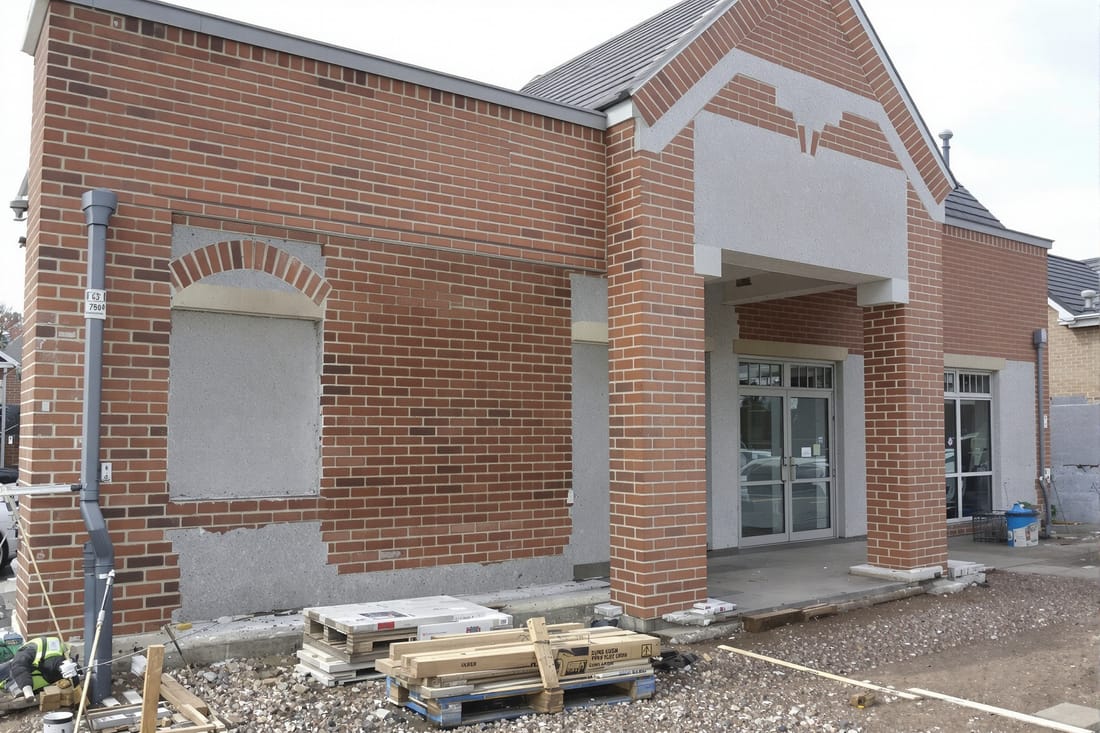
Commercial brick veneer gives you the appearance and durability of brick without the weight and structural demands of a full brick wall. It is attached to a structural backup like concrete masonry units (CMU), steel studs, or tilt up concrete panels. The key is not just the brick itself, but the way the veneer system is anchored, drained, and ventilated so your building stays dry and stable.
Every project starts with a site visit. We walk the building, review existing drawings if available, and look closely at exposure conditions. A storefront facing the main parking lot of a retail center has different needs than the shaded service side of a warehouse. We also check how the current walls are built so we can select anchors, flashing, and insulation that match the structure and meet Mississippi codes.
How Our Brick Veneer Systems Are Built
A commercial brick veneer system from Southaven Masonry follows a clear sequence so the wall performs as designed for decades.
First, we address the backup wall. On new construction, this might be CMU block or metal studs with sheathing. We verify that the substrate is plumb, properly braced, and sheathed where required. For metal stud systems, we confirm appropriate sheathing and fastener spacing so the veneer anchors have a solid base.
Next, we install a continuous air and water barrier over the sheathing or CMU where required by design. This can be a fluid applied membrane or a sheet membrane, depending on the specifications. Seams are taped or detailed at penetrations so water that reaches the back of the brick cannot move into the building.
We then install through wall flashing and weep systems at the base of walls, above window and door openings, and at shelf angles. The flashing is lapped correctly and weep vents or ropes are located at the correct spacing so any water that gets into the cavity can drain back out. In our local climate, with frequent heavy rain events and wind driven storms, a well detailed drainage cavity is critical.
After the moisture management components are in place, we set adjustable veneer anchors in a grid pattern, typically tied to stud or CMU layout. These anchors must be properly spaced both horizontally and vertically so they can transfer the veneer load to the structure and still allow for differential movement between the veneer and the building frame.
Finally, we lay the brick. Southaven Masonry maintains consistent bed and head joints, correctly tooled for water shedding and aesthetics. We keep the cavity depth consistent and avoid mortar droppings that could block weeps. Expansion and control joints are installed exactly where the plans call for them so the veneer can move with temperature and humidity changes without cracking.
Design Options for Your Commercial Brick Veneer
Brick veneer systems offer more flexibility than many Southaven business owners realize. We help you choose options that match your brand image and budget, without sacrificing performance.
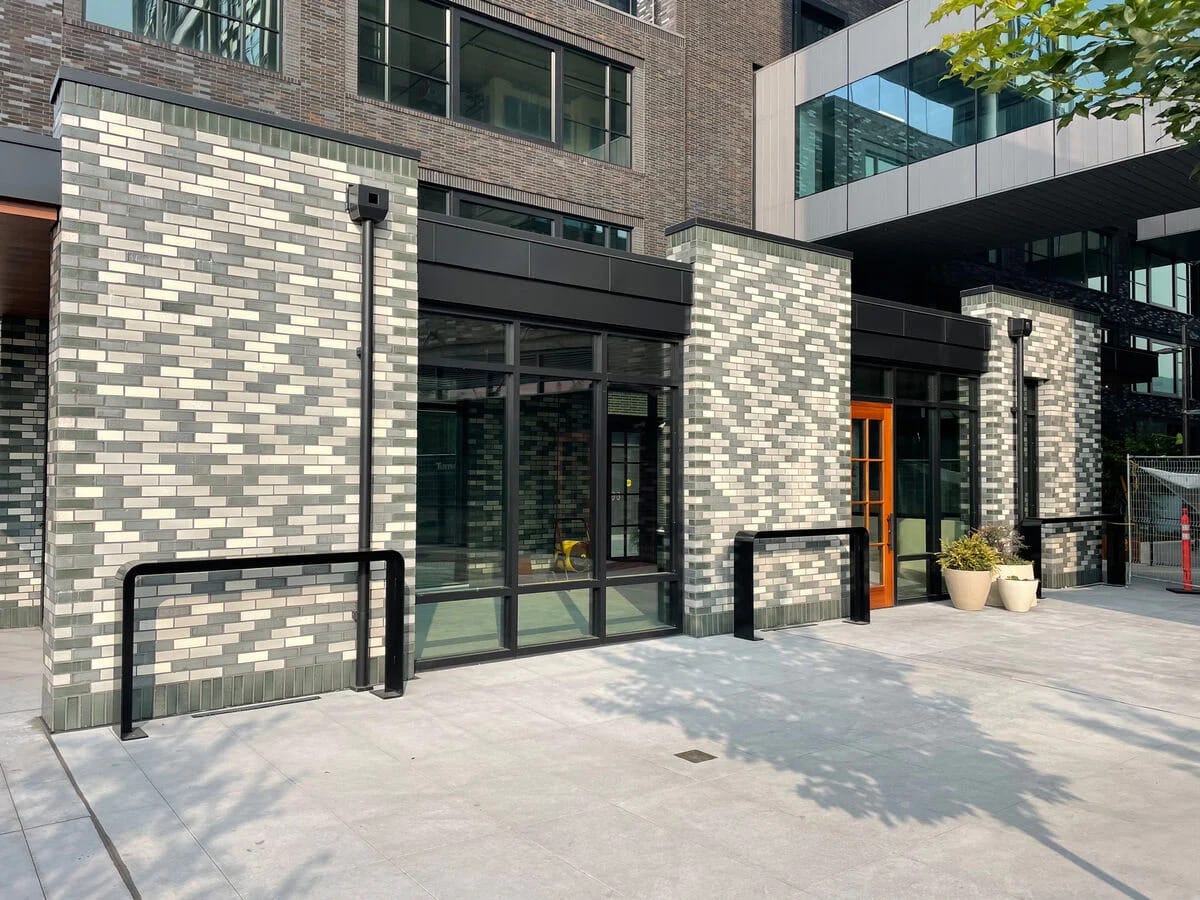
Brick type and color are the most visible decisions. We frequently install modular face brick in reds and earth tones for retail centers and professional offices, but we also work with darker ironspot and blended brick that give a more contemporary look for medical buildings or corporate offices. We can mix colors or use accent bands to tie in with existing structures or corporate color schemes.
Pattern and layout also have a big effect. Running bond is the most common, but we install soldier courses above window heads, stack bond accents at entry features, or rowlock caps on low walls. On multi tenant strip centers in Southaven, small changes like a contrasting soldier course at tenant separations help break up long walls and make each storefront feel more distinct.
For backup systems, we coordinate with architects and general contractors on CMU, light gauge steel framing, or tilt up concrete. Each backup type affects anchor selection, cavity width, and possible insulation strategies. In some cases, we integrate continuous rigid insulation in the cavity, while other projects rely on insulated sheathing behind the veneer. Our team helps evaluate which approach balances energy performance with wall thickness and cost.
We also provide solutions for high traffic areas. Where carts or forklifts might impact the wall, we can use harder face brick, reinforced low wall details, or slightly recessed veneer to reduce damage. For restaurants or medical facilities, we pay special attention to hose down and cleaning requirements so the mortar profile and brick texture will stand up to regular washing.
Local Climate, Scheduling, and Long Term Performance
In Southaven, commercial brick veneer needs to handle wide temperature swings, humidity, and the occasional freeze thaw cycle. Southaven Masonry selects materials and detailing with this climate in mind so you are not dealing with efflorescence, cracking, or moisture infiltration a few years after construction.
We pay attention to expansion joints and soft joints at interfaces with doors, windows, and structural elements. These allow the brick veneer to move slightly as temperatures change, which reduces stress and spider cracking that can otherwise appear after a couple of winters and summers.
Mortar selection is another climate related decision. We typically use Type N or Type S mortar, based on structural requirements and exposure. Our crews adjust mixes on site within specification to match weather conditions. In hot Southaven summers, we control evaporation with proper joint tooling timing and sometimes light misting so mortar does not dry too quickly and lose strength.
Scheduling is planned around realistic weather windows. Brick veneer can be installed most of the year, but we avoid laying brick when temperatures are extremely low or when storms are imminent. For occupied buildings, such as retail centers that remain open during façade upgrades, we plan staging and scaffolding so entrances remain usable and customer access is safe.
Long term performance also depends on maintenance planning. We show owners and facility managers where flashings and weeps are located, which sealants may need to be renewed in 10 to 15 years, and what type of cleaning methods are safe for the specific brick and mortar used. This helps Southaven property managers budget realistically and avoid cleaning methods that could damage the veneer.
Cost Drivers and How We Control Your Budget
Commercial brick veneer systems vary widely in cost, and our goal at Southaven Masonry is to explain those drivers up front so there are no surprises.
The largest cost factors are wall area, building height, and complexity of the design. Tall walls require more staging and safety measures. Many window openings, signage penetrations, or changes in wall plane add time for detailing and flashing. We review elevations carefully so we can point out where small design adjustments might provide savings without changing the overall look.
Material choices also affect price. Face brick color ranges, textures, and special shapes each come with different unit costs and lead times. We routinely price a primary brick choice along with one or two alternates so owners can see the impact of upgrading to a premium brick or simplifying to a more standard unit. Veneer anchors, air barriers, and flashing materials have similar option ranges, and we help pick systems that fit both performance and budget targets.
Labor efficiency is a critical piece. Straight, uninterrupted walls go faster than heavily stepped or heavily articulated facades. If you are still in design, we can advise your architect on bond patterns, joint details, and transitions that respect the building concept but do not excessively slow down masonry crews.
On renovation projects around Southaven, existing conditions can affect cost. Unexpected structural issues behind old veneer, inadequate sheathing, or previous water damage may require corrective work. We recommend a limited exploratory demolition on older buildings so everyone understands what is behind the façade before final pricing. This reduces change orders and helps the owner set the right contingency.
Throughout the process, we provide clear line item estimates that separate labor, materials, and equipment. That way property owners, developers, and general contractors can see exactly where money is going and where any value engineering efforts should focus.
Common Issues With Brick Veneer and How We Prevent Them
Because Southaven Masonry works on new commercial projects and repairs older veneer systems across North Mississippi, we see the same avoidable problems repeated on poorly built walls. We design our commercial brick veneer systems to avoid these issues from the start.
Water intrusion is the most common problem. It usually comes from missing or poorly lapped flashing, clogged weeps, or unsealed penetrations around signage and utilities. Our crews follow strict checklists for flashing laps, corner end dams, and weep spacing. We also coordinate with other trades to make sure anchor bolts, conduits, and sleeves are sealed properly as they pass through the veneer.
Cracking in the veneer can result from missing or mislocated movement joints, thermal expansion, or foundation movement. We work with structural engineers and architects to ensure control joints are correctly spaced and located at wall returns, openings, and changes in height. For existing buildings, we look for signs of foundation settlement before beginning work and may recommend structural evaluation if we see red flags.
Efflorescence, the white powdery staining on brick, is often caused by trapped moisture moving through the wall and bringing salts to the surface. By providing a functional drainage cavity, using proper mortar and cleaning practices, and protecting materials from rain during construction, we greatly reduce the chance of long term efflorescence.
On renovation or reclad projects, we carefully stage demolition of existing veneer so we do not damage the backup wall or expose tenants to unnecessary disruption. We contain dust and debris, verify that the backup wall is sound, and then rebuild the veneer with modern anchors and moisture control systems. This approach gives older Southaven properties the appearance and performance of new construction while keeping the building in service.
If you are planning a new commercial building or a façade upgrade anywhere in or around Southaven, Southaven Masonry can walk you through realistic options, show you examples from local projects, and build a brick veneer system that protects your investment for the long term.