Home › Commercial Retaining Walls
We build commercial masonry retaining walls in Southaven, MS for developments, parking lots, and sloped sites. Working from engineered plans, we construct reinforced CMU or block walls with proper drainage and finishes to control soil and protect structures and pavements.
Southaven Masonry provides professional commercial masonry retaining walls throughout Southaven, MS, Mississippi and the surrounding area. Our licensed, insured crew delivers safe, clean, on-time work with a free estimate before anything begins. Call (662) 863-5021 or request your free quote.
Commercial Retaining Walls That Protect Your Southaven Property
Commercial masonry retaining walls are not just about looks. On shopping centers, warehouses, apartments, and office sites around Southaven, they keep soil where it belongs so your pavement, buildings, and drainage systems stay stable. Southaven Masonry focuses on walls that handle real abuse: heavy rain, summer heat, delivery truck traffic, and long-term soil movement.
When we look at a potential retaining wall project, we start with the purpose. Is the wall mainly for slope control behind a loading dock, to hold a parking lot edge, to separate different elevations around a building, or to solve erosion where water keeps washing out a bank? The exact role drives height, thickness, reinforcement, and drainage details. We also look at access for equipment, how close the wall will be to structures or utilities, and how it will tie into sidewalks, curbs, or fencing.
North Mississippi soil is a big factor. Around Southaven, we see a mix of clay-heavy soils that hold water and expand, and looser fill dirt left from previous construction. Both matter. A wall built without recognizing how that soil behaves will eventually bulge or crack. Our crews probe the soil, look at existing erosion patterns, and, on more complex jobs, work with an engineer to confirm bearing capacity and design loads before we talk materials or layout.
Materials and Design Options for Commercial Masonry Retaining Walls
Southaven Masonry builds commercial retaining walls with several material systems, each suited for different budgets and site conditions.
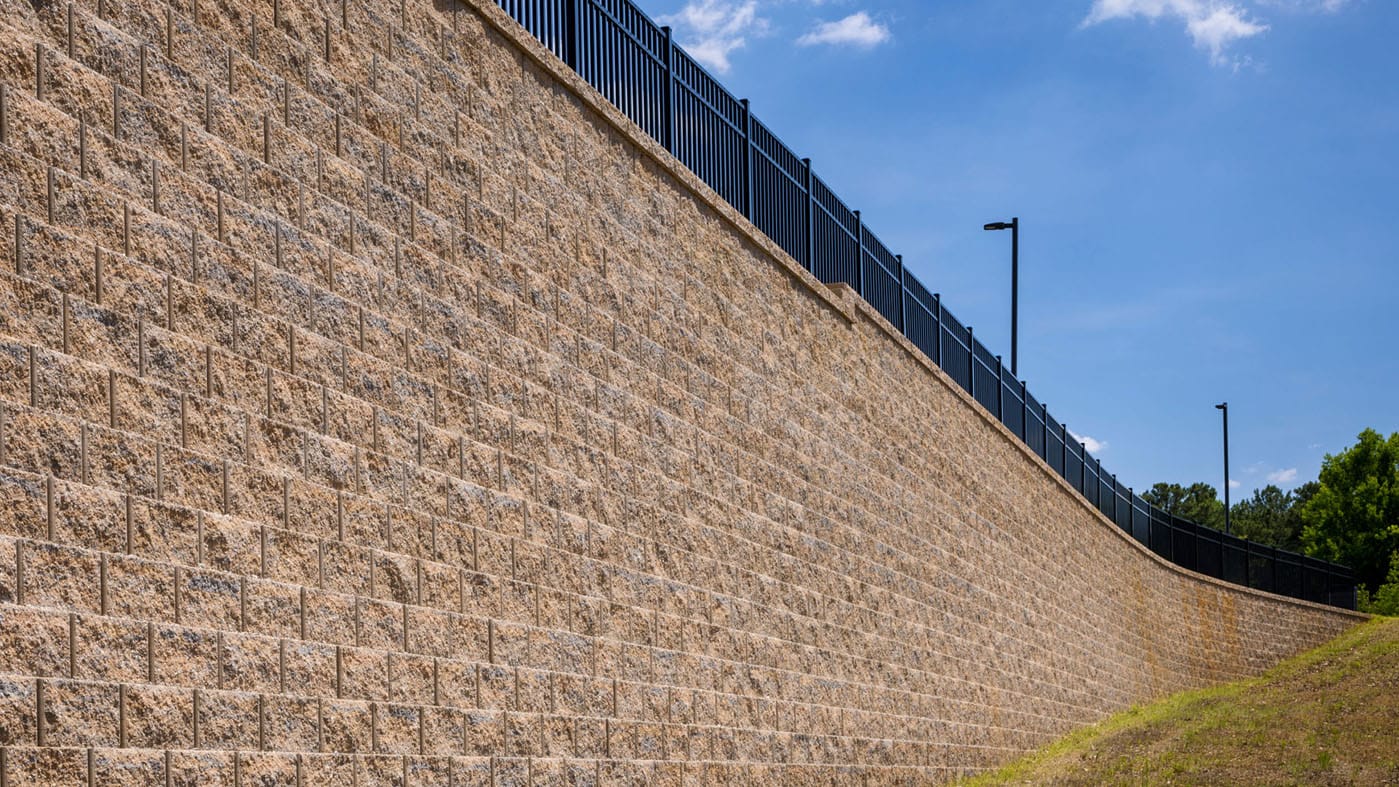
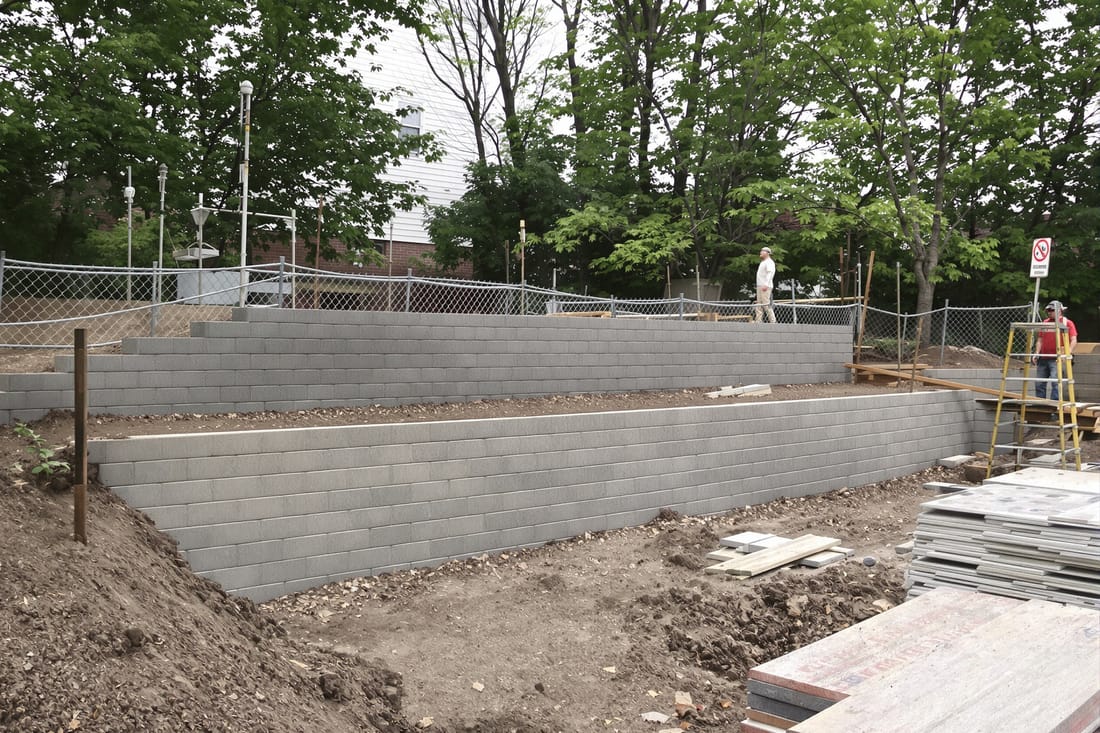
Concrete block retaining walls (segmental block systems) are common for commercial sites because they are modular, relatively quick to install, and can curve or step to follow the grade. For Southaven properties, we typically use engineered block systems with locking features and matching cap units. These are dry-stacked over a compacted gravel base and rely on weight, friction, and geogrid reinforcement, not just mortar, which lets them flex slightly with soil movement instead of cracking.
Cast-in-place concrete retaining walls are a better fit when you need thinner profiles or when space is tight, such as close to property lines or next to existing buildings. These walls require formwork, rebar cages, anchor dowels into footings, and more curing time. We often specify waterproofing membranes and drain boards along the back of the wall when it is adjacent to conditioned space or finished interiors.
Brick or stone veneer on a structural wall gives a more finished look for high-visibility areas like office fronts or medical complexes. In these cases, the structural work happens with block or poured concrete, then we attach a masonry veneer with proper weep joints and flashing so trapped moisture can escape. That prevents freeze-thaw issues in our winter swings.
For mid-height commercial walls that double as site features, we sometimes combine a structural lower wall section with stepped planters up top. This can reduce perceived height, spread the load, and give you landscaping space, which helps with stormwater and aesthetics around parking lots and entries.
How We Build a Reliable Commercial Retaining Wall in Southaven
A sound commercial masonry retaining wall is mostly decided below grade and behind the face of the wall, where you never see it. Southaven Masonry follows a step-by-step process so the structure holds up under Southaven weather and commercial traffic.
First, we clear and rough grade the area, then excavate to the design depth. This includes making room not only for the wall footing or base, but also for drainage pipe and backfill stone. We compact the subgrade in lifts using plate compactors or rollers, especially critical in the clay soils common in DeSoto County.
Next, we install the base. For segmental block walls, that means a crushed stone leveling pad compacted to specification and checked with both level and string lines. For poured-in-place or reinforced block walls, we pour a concrete footing with rebar tied to match the engineering drawings, making sure to get below local frost depth and to avoid undermining nearby pavements.
Then we build the wall courses or forms. Block walls go up course by course, with each row checked for level and alignment. On geogrid-reinforced walls, we roll out engineered geogrid at specific elevations, extending it back into the retained soil, then backfill and compact over it before stacking more blocks. For poured walls, we assemble forms, insert and tie rebar, then place concrete, using vibrators to limit voids.
Drainage installation is just as important as the wall itself. Typically we install perforated drain tile at the base of the wall, wrap it in fabric, and surround it with clean stone that extends up behind the wall. We use filter fabric between the stone and native soil so fine particles do not clog the system. In Southaven, where heavy storms can dump inches of rain in a short time, this step prevents hydrostatic pressure that can push walls outward.
Once structural and drainage work are complete, we cap the wall, grade the site for positive surface drainage, and tie in sidewalks, curbs, or guardrails. Final compaction of all disturbed areas keeps future settlement from creating trip hazards around your commercial property.
Cost Drivers, Scheduling, and Local Weather Considerations
Commercial masonry retaining walls vary widely in cost, and understanding what drives the number helps you budget and compare bids honestly.
Height and length are the starting points, but they are not the whole story. Taller walls usually need engineering, more reinforcement, and possibly tiered designs, all of which affect price. Soil conditions also matter. If we hit soft, wet, or fill soils, we may need deeper excavation, over-excavation and replacement with stone, or wider bases to spread the load.
Access is another major factor on Southaven jobs. If excavators, skid steers, and material deliveries can get close to the wall line, labor hours drop. Where access is tight in existing retail centers or apartment complexes, we may be forced to use smaller equipment, more hand work, and staged deliveries, which all increase cost.
Material choice, from standard block systems to custom stone facing, directly impacts the budget. Segmental block walls are often the most cost effective for straight commercial work. Cast-in-place concrete with a decorative veneer costs more upfront but may be justified in high-traffic, high-visibility spots or where narrow wall sections are required.
Weather also affects both timeline and scheduling. In Southaven summers, heat can accelerate concrete curing, so we adjust mix designs and curing methods. After long rains, we may need to let the site dry or stabilize the subgrade before compaction and wall construction. Building a retaining wall in saturated Mississippi clay is a shortcut to future failure, so we plan work phases around forecasted storms whenever possible.
If you have an active business on site, we often stage work in sections or off-hours to keep traffic flowing and meet lease or safety requirements. Clear phasing plans, temporary fencing, and marked pedestrian paths are part of our standard approach on operating commercial properties.
What Southaven Property Owners Should Ask Before Hiring a Masonry Contractor
Before you hire anyone to build commercial masonry retaining walls in Southaven, there are a few key questions that will protect your investment.
Ask for a site-specific design, not a generic wall height chart from a block manufacturer. For anything beyond a low landscape wall, the contractor should either provide stamped engineering or be willing to work with your engineer. Southaven Masonry frequently collaborates with local engineers to incorporate live loads from parking lots, surcharge from nearby buildings, and any stormwater requirements.
Confirm how drainage is being handled. Make the contractor explain, in plain language, where the water that hits the wall and the slope above it is going to go. You should hear details about drain tile, outlet locations, gravel backfill, filter fabric, and surface grading. If the answer is vague, that is a red flag.
Check that the contractor understands local conditions. In this part of Mississippi, that means dealing with expansive clay, periods of heavy rainfall, and quick freeze-thaw cycles in some winters. We adjust backfill selection, compaction efforts, and construction sequencing to manage these factors instead of fighting them later.
Finally, ask for examples of previous commercial walls, not just residential landscaping projects. A wall that protects a parking lot or loading dock is carrying different loads and faces different risks than a small garden wall. Southaven Masonry can walk you through nearby projects so you can see how the walls tie into pavements, drainage systems, and building foundations.
A well-built commercial retaining wall should disappear into your daily operations. It quietly holds back soil, keeps walkways and parking lots level, and directs water where it belongs. The time you spend up front choosing a contractor who understands engineering, drainage, and Southaven conditions is what keeps you from paying to rebuild the same wall a few years down the road.